

RV Storage in Liberty Hill: Full Walkthrough Before You Reserve
RV Storage in Liberty Hill: Full Walkthrough Before You Reserve
Habib Ahsan
May 5th, 2026
What Most Liberty Hill RV Owners Check — and What They Miss
RV storage in Liberty Hill is in steady demand, and the range of options available to owners in Williamson County has grown alongside the area's rapid residential and recreational growth. But more options does not automatically mean a better decision — and most owners evaluating storage for the first time focus on the one or two factors that are easiest to compare, while skipping the details that end up mattering most when the arrangement is actually in use.
This walkthrough covers every meaningful factor worth evaluating before reserving RV storage in Liberty Hill or the surrounding communities. It is structured the way a knowledgeable local would explain it — starting with the basics everyone knows to check and moving through the specifics that experienced RV owners wish they had asked about from the beginning.
Start With Space Size — It Matters More Than Most People Realize
The first question to answer is whether the facility actually has spaces that fit your specific rig. This sounds obvious, but it is the most commonly skipped step in the evaluation process. Many storage facilities in the Liberty Hill and Georgetown area have a mix of space sizes, and the availability of a space at the facility does not mean a space in the right size for your vehicle is available.
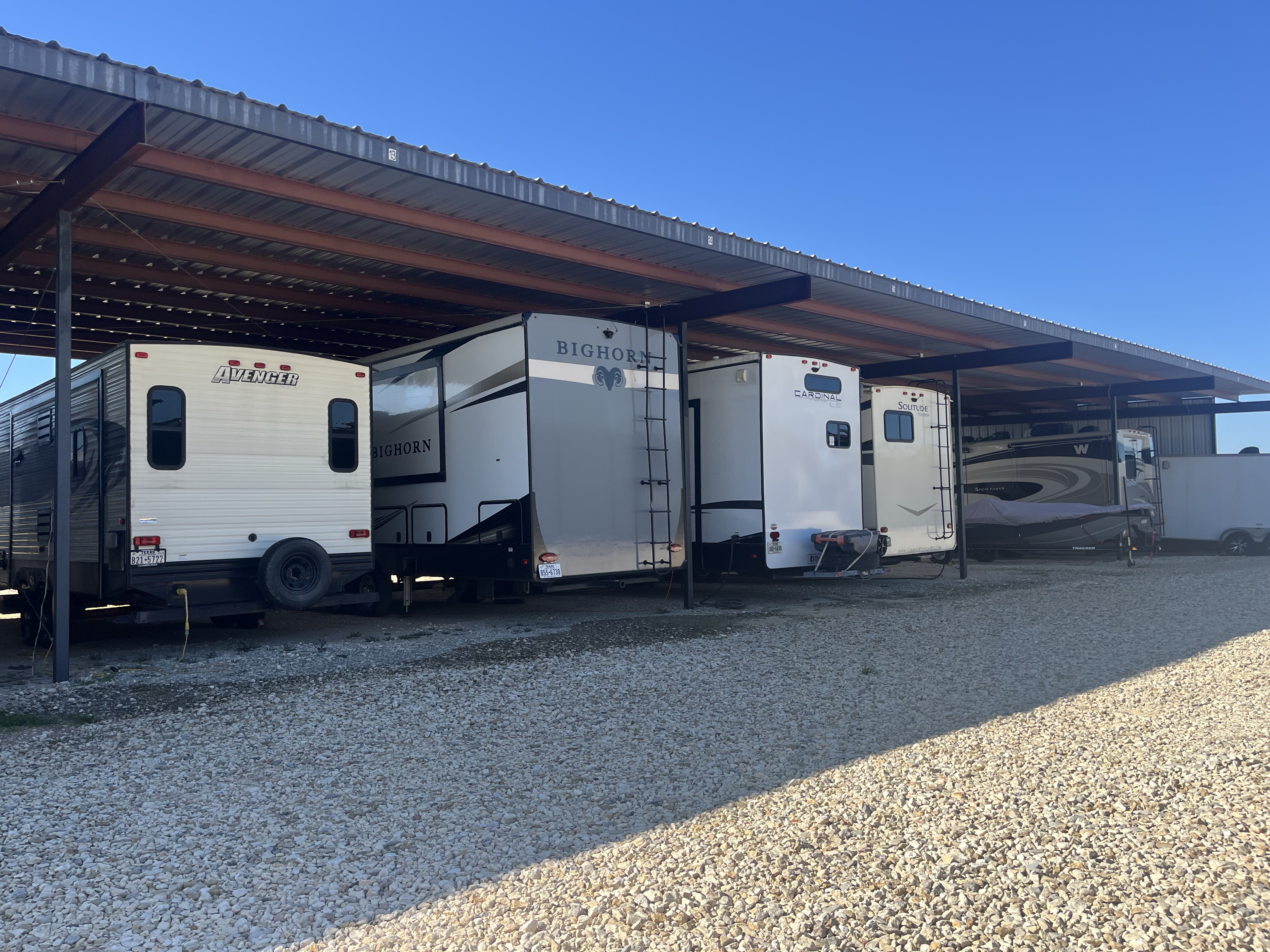
RVs and motorhomes vary significantly in length — a compact travel trailer might be 20 feet, a Class A motorhome with a tow vehicle can push 50 feet or beyond when combined. Fifth wheels and toy haulers fall across a wide range in between. Before making any other evaluation, confirm the facility has spaces in the length your vehicle actually requires — not just the shortest available option that technically fits something. Lone Star Boat and RV Storage on State Highway 29 accommodates vehicles up to 50 feet, with wide drive aisles designed for maneuvering large rigs without the kind of tight-turn stress that damages side mirrors and awning hardware.
Gate Access Hours — the Detail That Defines Your Experience
Gate access is the single feature that most shapes the day-to-day experience of storing an RV off-site. A facility that operates on business-hours-only access — or that locks the gate at 6pm — changes your entire usage pattern. You cannot pick up the RV on a Friday evening before a Saturday morning departure. You cannot return after a Sunday on the road and drop it off before the work week starts. Your schedule bends around the facility's hours rather than the other way around.
24/7 keyless gate access solves this entirely. Your unique access code works at any hour — dawn, midnight, or anything between. Arrivals and departures happen on your timeline. For families in Liberty Hill, Leander, and Cedar Park who use their RV regularly through spring and fall, this flexibility is not a premium feature — it is a baseline expectation worth verifying before committing to any lease.
Covered vs. Open vs. Enclosed — Understanding the Three Storage Types
Open Lot Storage
Open lot spaces are the most common and most affordable option at most facilities. The vehicle parks outdoors with no overhead structure. Open lot storage is a reasonable choice for short-term storage or for owners with robust RV covers and vehicles that are actively used and regularly maintained. For extended storage periods in Liberty Hill's climate — with its intense summer sun and unpredictable hail seasons — open lot exposure accelerates wear on exterior finishes, rubber roofs, and seals in ways that accumulate into real maintenance costs over time.
Covered Storage
Covered storage provides a solid roof over the vehicle while keeping the sides open. It eliminates direct sun and rain exposure, dramatically slows UV-related degradation of the roof and exterior, and removes hail risk entirely. The monthly premium over open lot storage is modest and is typically recovered within a season or two in avoided maintenance costs. For most RV owners planning to store for more than a few months at a time in Central Texas, covered storage is the practical middle-ground choice.
Enclosed Storage
Enclosed units offer four walls and a door — maximum protection from weather, UV, temperature swings, debris, and theft. They are the right choice for high-value motorhomes, Class A coaches, owners who travel with expensive gear stored inside, and those whose RV insurance policies specify physical protection standards for full coverage during storage periods. Enclosed units are also the most limited in inventory at any given facility, which means they fill first when spring demand peaks.
The Amenities That Separate Good Facilities From Great Ones
Beyond space size, access, and unit type, a handful of specific amenities make the ongoing storage experience meaningfully better for RV owners who use their vehicles regularly throughout the year.
Here is what is worth asking about before you reserve:
- Free RV dump station — a rare amenity that saves a dedicated trip to a paid dump site after every return; available to all tenants at the Liberty Hill location
- Free air compressor on-site — top off trailer tires before departure without stopping elsewhere; available at the Liberty Hill location
- Paved driveways throughout — essential for smooth maneuvering of large rigs without ground clearance or surface problems
- Active video surveillance — cameras that are recording, not merely present; meaningful deterrence and documentation in the event of an incident
- Bright LED security lighting — full property illumination for safe access at any hour and deterrence against overnight incidents
- Online booking and account management — reserve, pay, and manage your unit from any device without requiring an in-person visit
- Tenant insurance availability — straightforward coverage for stored vehicles that fills gaps left by standard RV policies during extended storage
- One-way U-Haul truck rentals — a practical convenience for tenants managing moves or large item transport alongside their storage arrangement
Lease Terms and Flexibility
Lease flexibility is worth evaluating before signing anything. Month-to-month leasing — available at Lone Star Boat and RV Storage — means no long-term commitment and no penalty for adjusting your arrangement as your needs change. Seasonal storage patterns, travel schedules, and life circumstances all shift over time, and a month-to-month structure accommodates that reality without locking owners into arrangements that no longer fit.
For owners who know they will store year-round and prefer locked-in consistent pricing, annual options are also worth asking about. The team at the Liberty Hill location can walk you through both so you can choose the structure that actually fits your usage pattern.
New Tenant Savings and Discounts Worth Knowing About
New tenants at Lone Star Boat and RV Storage receive 50% off their second and third months — a meaningful saving that reduces the cost of the first part of your lease and gives you time to settle into the arrangement before paying full rate. Military and first responder discounts are available for eligible tenants. Referral discounts apply when you bring a neighbor, family member, or friend along.
The facility is locally owned and operated — not a national chain — which means the people managing your storage are part of the Liberty Hill, Georgetown, and Williamson County community. Questions get answered by people who know the property and care about their reputation in the local market.
Making the Right Call Before You Reserve
RV storage in Liberty Hill is a decision that shapes your experience with your vehicle for the entire time your lease is active. The checklist above covers every meaningful factor — space size, access hours, unit type, amenities, lease flexibility, and pricing structure. Working through it before committing takes thirty minutes and consistently leads to better outcomes than signing based on price alone.
Browse available unit sizes, covered and enclosed options, and current availability on the Liberty Hill RV storage reservations page. To compare all three Hill Country locations, visit the Lone Star RV and boat storage page. For questions about specific unit availability, amenities, or lease options, reach the local team through the contact page — a real person from the Liberty Hill area will get back to you.
Categories