

RV Battery and Fluid Maintenance for Vehicles Stored Over 30 Days
RV Battery and Fluid Maintenance for Vehicles Stored Over 30 Days
Habib Ahsan
April 22nd, 2026
The Quiet Damage That Happens When an RV Sits Idle
Most RV owners think about storage in terms of space and security. What they think about less — until it causes a problem — is what happens inside the vehicle while it sits. RV battery and fluid maintenance during storage is one of the most overlooked parts of owning a recreational vehicle, and skipping it costs Hill Country owners real money every season. The scenario plays out the same way every spring. An owner pulls into their storage facility in Boerne or Bulverde, ready to load up for the first trip of the year, and finds a battery that won't hold a charge, a coolant reservoir that looks muddy, or brake fluid that has absorbed enough moisture to compromise the system. None of it is dramatic until it is — and all of it was preventable.
Why RV Batteries Suffer Most During Extended Storage
A lead-acid or AGM battery in an RV does not simply wait patiently while the vehicle sits. Parasitic draw — the slow, continuous pull of onboard electronics like clocks, detectors, and control panels — drains the battery gradually even when nothing is actively running. In the Texas heat, that process accelerates. A battery that drops below roughly 12.4 volts enters a state called sulfation, where lead sulfate crystals form on the plates and permanently reduce capacity. A battery left deeply discharged for weeks or months may never fully recover. This is not a defect — it is physics. And it is the most common reason RV owners find themselves replacing a battery that seemed fine when they parked.
What to Do Before Your RV Goes Into Storage
Preparing the battery before a 30-day or longer storage period is straightforward and takes less than an hour. Here is what experienced RV owners in the Boerne, Helotes, and Spring Branch area typically do:
- Fully charge the battery before storing — never store a depleted battery
- Disconnect the negative terminal to eliminate parasitic draw entirely
- Connect a quality battery maintainer or trickle charger if power is accessible at your storage unit
- Check the battery age — anything over three years should be load-tested before storage, not after
- Clean the terminals and apply a light coat of dielectric grease to prevent corrosion
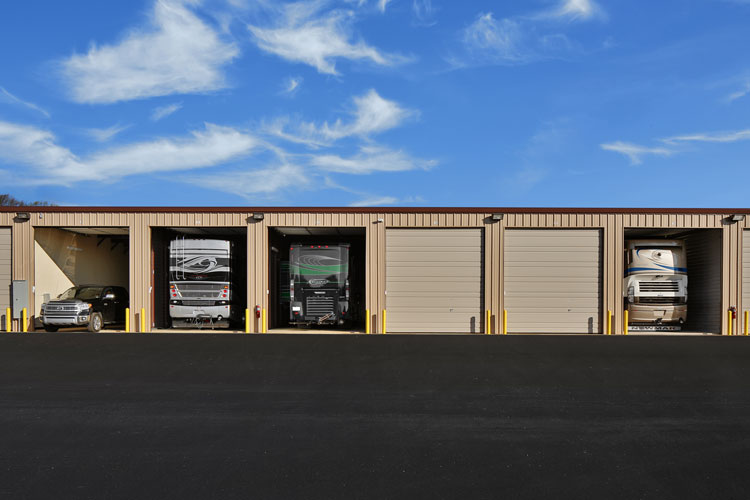
Drive-up units at Lone Star Boat and RV Storage in Boerne make connecting a battery maintainer practical — you are not working around obstacles or hauling extension cords across a lot. That kind of access matters when you are doing maintenance correctly.
Fluids That Degrade During Long-Term RV Storage
Batteries get most of the attention, but fluids are equally important for RVs stored beyond 30 days. Several systems are vulnerable to degradation during extended idle periods, and the Texas climate — hot, humid summers followed by unpredictable winters — speeds up the process.
Engine Coolant
Coolant breaks down over time and loses its ability to resist corrosion and regulate temperature effectively. Most manufacturers recommend flushing and replacing coolant every two to three years, but storage periods accelerate the timeline. Before storing for a full season, check the freeze point and pH level with an inexpensive test strip. If either is out of range, a flush before storage protects the cooling system during the idle period.
Brake Fluid
Brake fluid is hygroscopic — it actively absorbs moisture from the air. The longer an RV sits, the more moisture accumulates in the brake lines, lowering the fluid's boiling point and increasing the risk of brake fade under hard use. Owners storing an RV for three months or more should check the moisture content before the next trip. This is a five-minute test that most auto parts stores can perform for free.
Generator Fuel and Engine Oil
Fuel left in the generator carburetor degrades and leaves behind varnish deposits that clog jets and passages. Running the generator dry before storage — or treating the fuel with a quality stabilizer — prevents this. Engine oil, meanwhile, accumulates combustion byproducts over time. Changing the oil before a long storage period rather than after means the engine sits in clean oil rather than acidic used oil for months on end.
The Full Pre-Storage Fluid Checklist
Here is a consolidated list of the fluids worth checking or servicing before an RV goes into storage for 30 days or more:
- Engine coolant — test pH and freeze point; flush if due
- Brake fluid — check moisture content; replace if above 3% water
- Engine oil — change before storage if due within the next few months
- Transmission fluid — check level and condition; top off or service if due
- Power steering fluid — check for discoloration; replace if dark or burnt-smelling
- Generator fuel — stabilize or run dry before storage
- Fresh water tank — drain completely and sanitize to prevent mold and bacterial growth
- Water heater — drain per manufacturer guidelines to prevent mineral buildup
None of these tasks requires a professional mechanic. Most RV owners in the Boerne, Fair Oaks Ranch, and Bergheim area handle them in an afternoon before dropping the vehicle off at their storage unit. The payoff is an RV that starts and runs cleanly on the first try when the season opens.
How Your Storage Facility Choice Affects Maintenance
The right storage environment reduces how much maintenance work your RV actually needs. A covered or enclosed unit keeps the vehicle out of direct sun, which slows fluid degradation and protects rubber seals, hoses, and belts from UV damage. It also moderates temperature swings — a significant factor given how dramatically Hill Country temperatures can shift between seasons. Bright LED security lighting and 24/7 keyless gate access at Lone Star Boat and RV Storage in Boerne mean you can check on your vehicle, connect a battery maintainer, or add a fluid top-off at any time — not just during office hours. That flexibility makes staying on top of RV battery and fluid maintenance during storage genuinely practical rather than a chore that gets deferred.
Getting Your RV Storage Set Up the Right Way
A well-maintained RV stored in a good facility comes out of storage ready to go. The combination of proper pre-storage prep and the right environment is what separates owners who spend the first weekend of the season troubleshooting from those who are already on the road. Lone Star Boat and RV Storage is locally owned and operated, with covered, open, and enclosed options available in Boerne on TX-46. New tenants receive 50% off their second and third months, making it easy to get started without a high upfront cost. Browse available unit sizes and reserve your space on the Boerne RV storage reservations page. To explore all three Hill Country locations, visit the Lone Star RV and boat storage page. For questions about unit options, sizing, or amenities, reach the local team through the contact page — a real person from the Boerne area will get back to you.
Categories