
Fire and Climate Safety Standards: What to Ask Before Signing a Storage Lease
Fire and Climate Safety Standards: What to Ask Before Signing a Storage Lease
Habib Ahsan
May 20th, 2026
The Questions Most RV and Boat Owners Forget to Ask Before Signing
Most people evaluating storage facilities in Liberty Hill, Georgetown, Leander, and across the Hill Country ask about price, gate access, and unit size. Very few ask about fire safety and climate exposure standards before signing a storage lease — and those questions are the ones that most directly affect whether a stored vehicle survives an extended Texas summer in the condition it went in. Understanding what to ask and why the answers matter takes the storage evaluation from a price comparison to a genuine protection assessment. This guide covers the fire and climate safety questions worth asking any storage facility before signing, and how the answers should shape the decision for RV and boat owners storing high-value vehicles in the Central Texas market.
Why Fire and Climate Risk Matter More for RV and Boat Storage
RVs and boats are not inert objects during storage. They contain fuel systems, propane tanks, lithium or lead-acid batteries, electrical components, and rubber hoses and seals that all respond to heat, UV radiation, and temperature cycling in ways that create both degradation and, in extreme cases, fire risk. The Hill Country climate accelerates these processes. Summer temperatures in the Liberty Hill, Jarrell, and Georgetown corridor regularly push above 100 degrees. An RV stored in direct sun on an open lot can experience interior temperatures significantly above ambient air temperature. That heat cycles through battery systems, propane regulators, and fuel line connections repeatedly across a storage season. Understanding how a facility manages or mitigates that climate exposure is a meaningful part of the storage decision.
Fire Safety Questions Worth Asking Before You Sign
Question One — How Is the Property Laid Out?
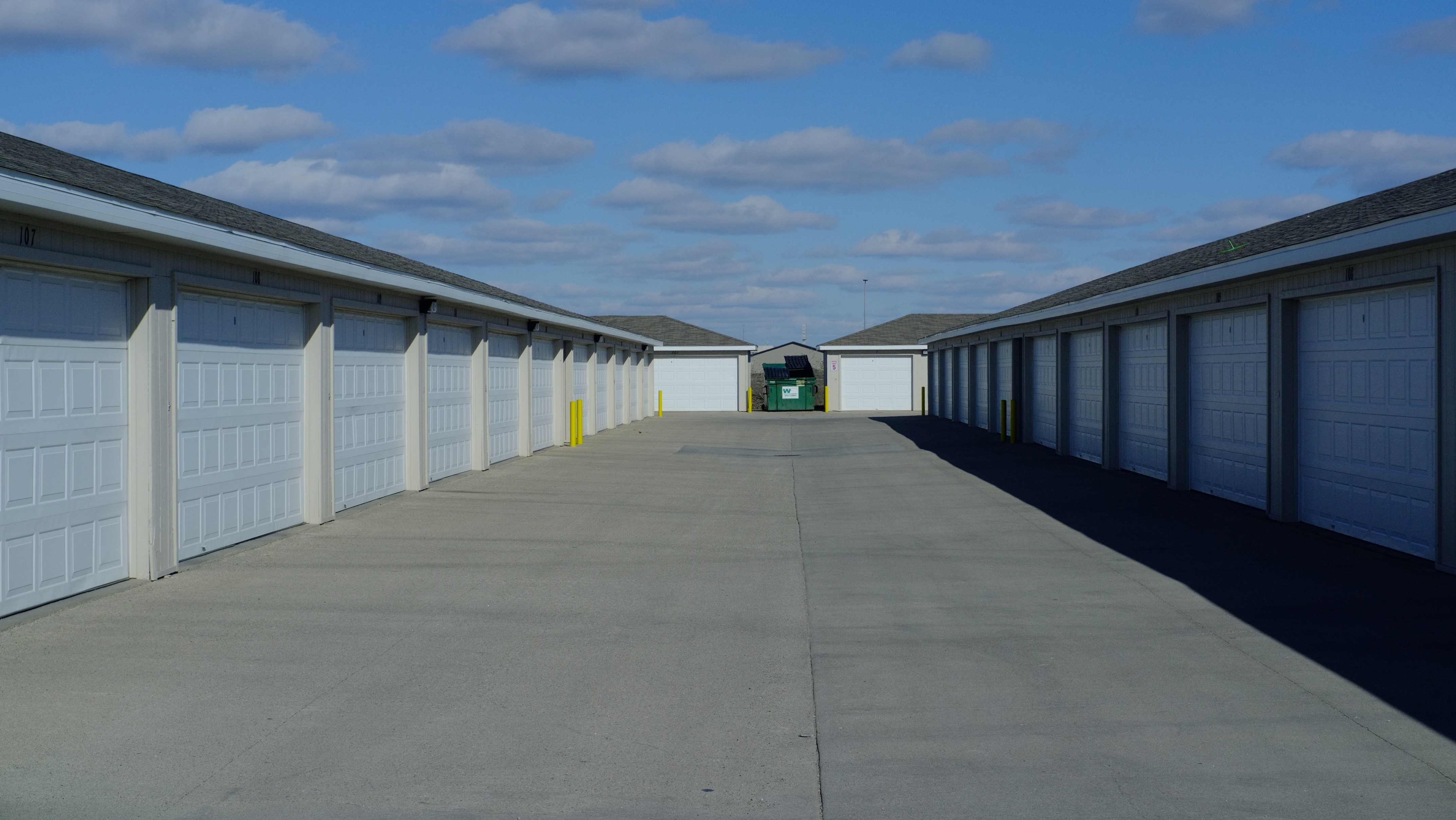
The physical layout of a storage facility significantly affects fire risk and, critically, fire spread risk. A well-designed facility maintains adequate spacing between stored vehicles so that a fire involving one vehicle does not transfer immediately to the ones beside it. Wide drive aisles serve this purpose in addition to making maneuvering easier — they create physical separation between stored assets. What to ask: Are drive aisles wide enough to provide separation between stored vehicles? Are units arranged with spacing designed to limit fire transfer? A facility that can answer these questions specifically is a facility that has thought about the issue.
Question Two — What Surveillance and Lighting Is in Place?
Active video surveillance and bright perimeter lighting serve fire safety in ways beyond the obvious security function. A fire in an unmanned storage facility that begins overnight and goes undetected for hours does far more damage than one that triggers an alert quickly. Facilities with active surveillance systems and full LED lighting across all storage areas are more likely to identify and respond to an incident in the early stages. What to ask: Are cameras actively recording or passively deterring? Does LED lighting cover all storage areas, not just the entrance and main aisle? Both matter. A camera that is not recording and a light that covers only the gate provide limited actual protection.
Question Three — Are Propane and Fuel Regulations Enforced?
RVs and boats stored with propane tanks, fuel in tanks, or charged battery systems represent stored energy that requires proper handling. Responsible facilities have clear policies on propane valve status during storage, fuel levels, and battery disconnect requirements for long-term tenants. These are not onerous requirements — they are the kind of practical safety standards that experienced facility operators enforce consistently. What to ask: Does the facility have any requirements or guidelines for propane, fuel, or battery management during storage? A facility that has considered these questions has a more mature approach to vehicle safety than one that has not.
Climate Safety Questions That Protect Your Vehicle
What Weather Protection Options Are Available?
Climate exposure is a storage safety issue that is easy to overlook because the damage accumulates gradually rather than appearing as a single event. UV radiation on rubber roof membranes, propane hoses, and electrical insulation degrades these components over a Texas storage season in ways that reduce their integrity over time. The same applies to gel coat, vinyl seals, and battery performance. Covered and enclosed storage options significantly reduce climate exposure during storage periods. Here is what each option protects against:
- Covered storage — blocks direct UV on the roof, eliminates hail impact risk, reduces rain accumulation on roof seams
- Enclosed storage — removes UV exposure from all surfaces, moderates temperature extremes inside the unit, eliminates wind-driven debris and hail from all sides
- Open lot storage — no protection from UV, hail, temperature extremes, or wind; appropriate only for short-term storage or vehicles with robust protective covers in good condition
How Does the Facility Handle Extreme Heat Periods?
The Hill Country summer is not uniformly hot — it cycles through intense heat during the day, and significant temperature drops overnight in some seasons. That cycling creates thermal expansion and contraction stress on rubber components, electrical connections, and the structural materials that hold RVs and boats together. Enclosed storage moderates this cycling by maintaining a more stable interior temperature relative to ambient conditions. What to ask: Are enclosed units temperature-stabilized in any way, or simply physically enclosed? For owners of high-value RVs with sensitive electronics, climate-moderated enclosed storage provides measurably better protection than enclosed storage that simply blocks weather exposure.
How These Questions Apply to the Liberty Hill Market
For RV and boat owners in Liberty Hill, Cedar Park, Leander, Georgetown, Andice, and Jarrell storing vehicles along the State Highway 29 corridor, the climate safety questions above are not hypothetical — they reflect real conditions that affect stored vehicles every season. Lone Star Boat and RV Storage on State Highway 29 is designed with wide drive aisles for vehicle separation and maneuvering, active video surveillance across the property, bright LED security lighting throughout, and covered and enclosed unit options for owners who want meaningful climate protection during storage. The local team is reachable and straightforward to work with when specific questions come up before signing. New tenants receive 50% off their second and third months. Month-to-month leasing keeps the arrangement flexible.
Browse covered and enclosed unit availability at the Liberty Hill storage reservations page. To compare all three Hill Country locations, visit the Lone Star RV and boat storage page. For specific questions about facility layout, safety standards, or climate protection options, reach the team through the contact page — a local person will give you straight answers before you commit.
Categories