
Covered vs. Enclosed RV Storage in Boerne: Which Is Right for You?
Covered vs. Enclosed RV Storage in Boerne: Which Is Right for You?
Habib Ahsan
May 19th, 2026
The Storage Decision That Shapes How Your RV Holds Up Over Time
The choice between covered and enclosed RV storage in Boerne is one that most owners make quickly — usually based on price alone — and revisit later when they see what a Texas summer does to a vehicle that did not get the right level of protection. Understanding what each option actually provides, and which one fits your specific RV and usage pattern, takes about ten minutes and can meaningfully change the condition of your vehicle at the end of a storage season. This guide breaks down exactly what covered and enclosed storage each delivers, how the Hill Country climate factors into the decision, and the specific RV types and owner situations that point clearly toward one option or the other.
What Covered Storage Actually Provides
Covered storage means a solid, permanent roof structure over the vehicle with open or partially open sides. The primary protection it delivers is overhead — sun, rain, and hail do not reach the roof or top surfaces of the vehicle directly. That is a significant upgrade from open lot storage, and for most of the damage that accumulates on a stored RV in South Texas, it addresses the most critical vulnerability.
Here is what covered storage protects against effectively:
- Direct UV radiation on the roof membrane and top surfaces — the primary driver of rubber roof degradation and exterior oxidation
- Rain and water accumulation on roof seams and penetration points — reducing the risk of water intrusion during extended storage periods
- Hail impact on the roof — which represents a significant damage risk during Hill Country hail seasons
- Bird and debris accumulation on top surfaces — a minor but consistent maintenance issue on open lot vehicles
What covered storage does not fully address is lateral UV exposure on sidewalls and windows, wind-driven rain on the sides of the vehicle, and the thermal cycling that occurs when ambient temperature swings between seasons. The sides of the vehicle remain exposed to the elements, which matters more for some RV types and ownership situations than others.
What Enclosed Storage Adds to the Equation
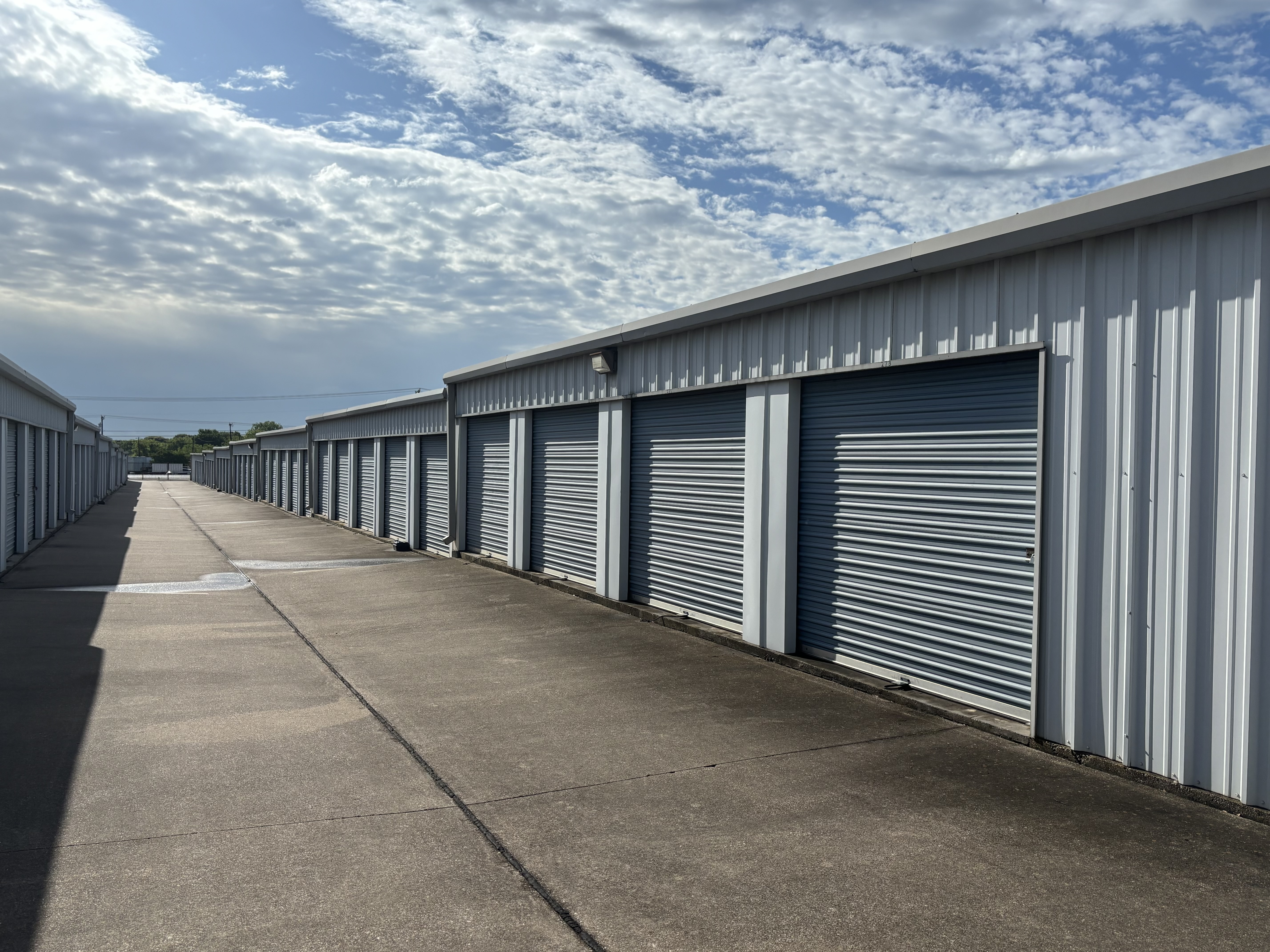
Enclosed storage surrounds the vehicle with a solid structure — four walls, a lockable door, and a roof. It eliminates all direct weather exposure, not just the overhead component. The vehicle inside an enclosed unit experiences dramatically reduced UV exposure on all surfaces, minimal temperature cycling compared to open or covered storage, and essentially no hail or wind damage risk. Beyond weather protection, enclosed storage offers a security layer that covered storage cannot match. The vehicle is not visible from outside the unit. Access requires opening a locked door rather than simply pulling into a covered bay. This combination of visual concealment and physical access control meaningfully reduces theft and vandalism risk for owners storing high-value vehicles for extended periods.
What Enclosed Storage Protects That Covered Storage Does Not
The specific damage categories that enclosed storage addresses and covered storage leaves partially exposed include:
- Sidewall UV fading and oxidation — fiberglass sidewalls and vinyl graphics on RV exteriors degrade significantly under sustained lateral UV exposure
- Slide-out seal and gasket degradation — the rubber seals on slide-outs are exposed to UV and temperature cycling even under a covered roof
- Window frame sealant on sidewalls — sealant exposed to direct lateral sun dries faster than sealant on surfaces shaded by a roof
- Vinyl decal and graphic integrity — decal graphics on high-end RVs fade and peel faster under sustained UV exposure from all directions
- Interior temperature stability — enclosed units moderate temperature extremes that cause thermal cycling stress on all interior components
How the Boerne and Hill Country Climate Shapes the Decision
Boerne and the TX-46 corridor experience UV intensity that is at the high end of what most RV manufacturers account for in their material specifications. The proximity to the Texas Hill Country means temperature swings between summer highs and winter lows are significant. And while South Texas is not the most severe hail market in the state, the Boerne and Bulverde corridor has seen notable hail events in recent seasons that caused real cosmetic and structural damage to vehicles stored in open or covered configurations. For owners in Boerne, Fair Oaks Ranch, Spring Branch, and Helotes who store for six or more months of the year — which describes most RV owners with a seasonal usage pattern — the cumulative effect of the local climate on an inadequately protected vehicle is visible within a season or two and expensive to reverse.
Which Option Is Right for Your RV and Situation
Covered Storage Makes Sense When
Covered storage is the appropriate choice for owners who meet most of these criteria:
- The RV is used regularly throughout the season and storage periods are shorter — typically two to six weeks between trips
- The vehicle is a standard travel trailer, fifth wheel, or entry-level motorhome without full body paint or premium graphic packages
- The owner plans to use a quality RV cover on the sides of the vehicle during storage periods
- Budget is a primary consideration and the vehicle's current condition makes the cost of enclosed storage hard to justify against its remaining value
Enclosed Storage Makes Sense When
Enclosed storage is the appropriate choice for owners who meet one or more of these criteria:
- The vehicle is a Class A motorhome, high-end fifth wheel, or luxury travel trailer with full body paint or premium exterior finish
- Storage periods regularly exceed sixty to ninety days — the cumulative UV and weather exposure over longer periods makes enclosed protection significantly more valuable
- The owner's RV insurance policy specifies physical protection standards for full coverage during storage, which some comprehensive policies require
- The vehicle is stored year-round and needs consistent protection through both summer UV exposure and winter temperature extremes
- Theft risk is a concern — enclosed storage removes the vehicle from visibility entirely and requires physical access to reach it
Both Options Are Available at the Boerne Location
Lone Star Boat and RV Storage on TX-46 offers covered and enclosed storage options for Boerne, Bulverde, Spring Branch, and Fair Oaks Ranch RV owners — alongside open lot spaces for tenants whose usage patterns make open storage the practical choice. New tenants receive 50% off their second and third months, and month-to-month leasing keeps the arrangement flexible as needs change across seasons. Browse covered and enclosed unit availability and reserve your space on the Boerne RV storage reservations page. To compare all three Hill Country locations, visit the Lone Star RV and boat storage page. Not sure which option fits your specific rig and situation? Reach the local team through the contact page — a real person from the Boerne area will help you make the right call.
Categories