

Covered Boat Storage vs. Open Lot: The True Cost for Texas Boat Owners
Covered Boat Storage vs. Open Lot: The True Cost for Texas Boat Owners
Habib Ahsan
April 23rd, 2026
The Storage Decision That Costs More Than Most Boat Owners Realize
Most boat owners in Texas choose their storage option based on one number: the monthly rate. Covered storage costs more than an open lot — that part is obvious. What is less obvious is how quickly that price difference disappears when you factor in what the Texas climate does to a boat stored without protection. The true cost comparison of covered boat storage vs. open lot in Texas is a lot closer than the sticker price suggests, and for many owners, it flips entirely. This is not a sales pitch — it is arithmetic. The Hill Country sun, the hail seasons, the humidity shifts between summer and winter, and the UV intensity along the I-35 corridor from Liberty Hill to Marble Falls all do measurable damage to boats stored in the open. Understanding what that damage actually costs is the starting point for making a genuinely informed storage decision.
What Open Lot Storage Actually Exposes Your Boat To
An open lot gives you a space to park your boat and not much else. No roof, no walls, no weather barrier of any kind. In states with mild climates, that tradeoff is manageable. In Texas — and particularly in the Hill Country region around Liberty Hill, Georgetown, Burnet, and Marble Falls — the exposure calculus is far less forgiving.
UV Damage: The Slow and Steady Cost
Ultraviolet radiation is the single biggest threat to a boat stored outdoors in Texas. The sun here is intense, the season is long, and the damage compounds over time in ways that are easy to miss until a repair bill lands in your hands. Here is what prolonged UV exposure does to a boat stored on an open lot over one to three seasons:
- Gel coat oxidation — the glossy finish fades, chalks, and becomes porous, allowing water intrusion
- Vinyl upholstery cracking — seat cushions split, peel, and lose structural integrity
- Rubber seal deterioration — hatches, windows, and compartment seals dry out and shrink, compromising waterproofing
- Carpet fading and degradation — interior flooring breaks down faster under repeated UV cycles
- Plastic and fiberglass stress — repeated heating and cooling cycles cause micro-fractures over time
- Canvas and cover wear — even quality boat covers degrade faster under sustained sun exposure
A professional gel coat restoration on a midsize fiberglass boat typically runs between four hundred and twelve hundred dollars, depending on severity and vessel size. Re-upholstering a set of boat seats adds another several hundred to well over a thousand. These are not hypothetical costs — they are the routine maintenance bills of owners who store on open lots for more than a season or two.
Hail: The Unpredictable and Expensive Variable
The Hill Country and surrounding Central Texas communities experience genuine hail events multiple times per year. Liberty Hill, Cedar Park, Leander, and Jarrell have all seen significant hail in recent seasons — and unlike UV damage, hail damage happens in minutes rather than months. Fiberglass hulls dent and crack under direct hail impact. Windshields shatter. Canvas covers are destroyed. Electronics and instrument panels exposed to the elements can take water damage during the same storm. A single severe hail event can produce five to fifteen thousand dollars in damage to a mid-range boat — damage that a covered storage unit prevents entirely. Insurance covers some of this, but not all of it. Deductibles apply. Depreciation applies. The time and inconvenience of filing a claim and arranging repairs do not appear on any reimbursement check. Covered storage removes the hail variable from the equation.
What Covered Storage Actually Protects — and What It Costs
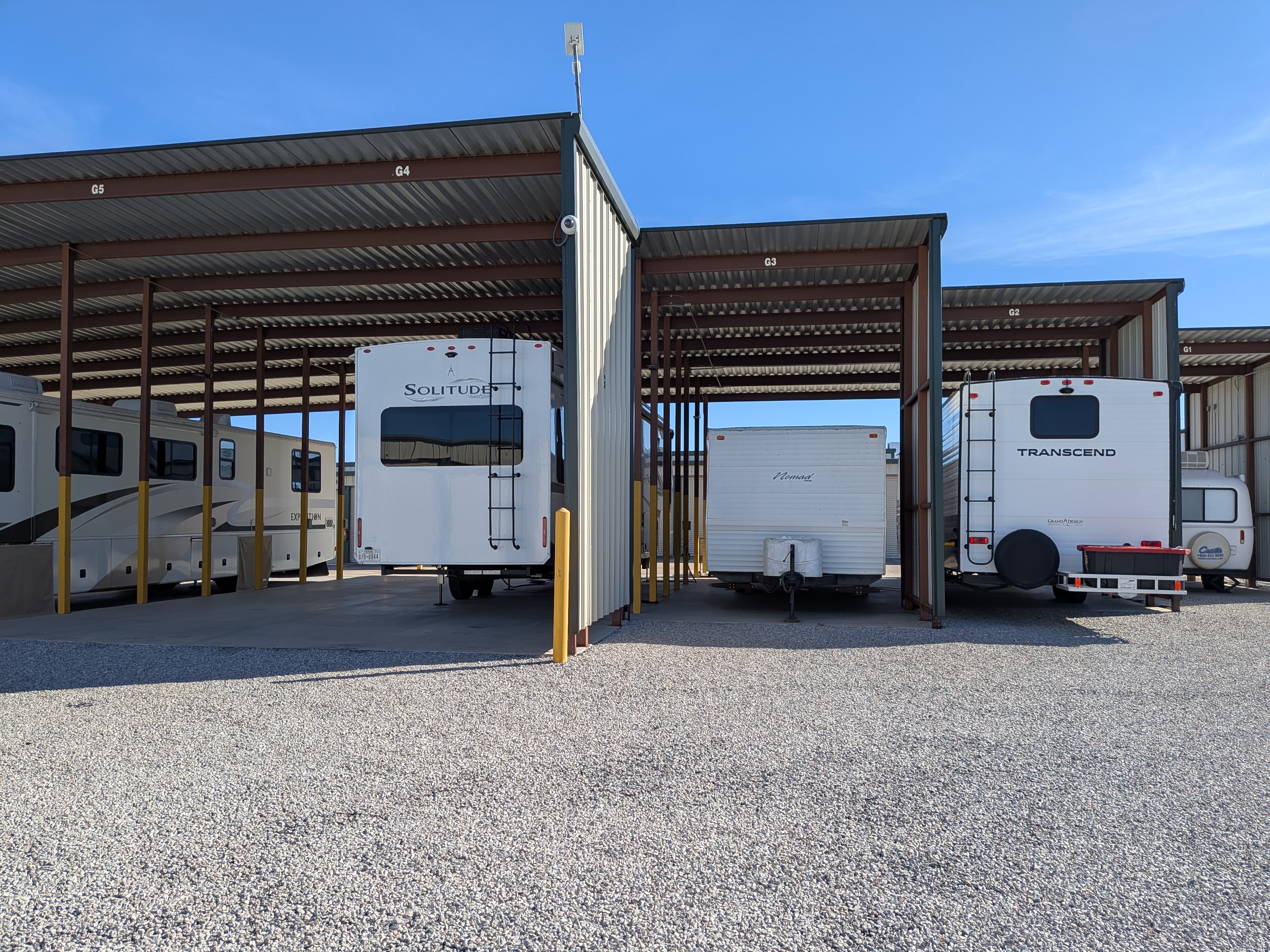
Covered boat storage provides a solid roof over the vessel while keeping the sides open for airflow. It shields the boat from direct sun and rain and eliminates the hail risk. Enclosed storage goes further — four walls and a roof, maximum protection against everything, including wind-blown debris, extreme temperature swings, and opportunistic theft. At facilities like Lone Star Boat and RV Storage on State Highway 29 between Liberty Hill and Bertram, covered and enclosed options start at accessible monthly rates — with spaces accommodating boats up to 50 feet. Month-to-month leasing means no long-term commitment, and new tenants save 50% off their second and third months. Running a simple comparison: if covered storage costs an additional twenty to thirty dollars per month over an open lot, that premium over a full year totals two hundred forty to three hundred sixty dollars. A single gel coat touch-up, a set of replacement seat cushions, or a post-hail deductible each costs more than that annual premium — often by a significant margin.
The Resale Value Argument for Covered Storage
Boat owners who plan to sell eventually have an additional financial reason to prioritize protected storage. Condition is the single largest variable in used boat pricing, and UV damage, weathered gel coat, and cracked upholstery are the first things a serious buyer notices and uses to negotiate the price down. A boat stored under cover for five years arrives at resale in meaningfully better cosmetic and structural condition than an equivalent vessel stored on an open lot. That difference shows up in the asking price, the buyer's offer, and how long the sale takes. For owners of higher-value boats, the cumulative resale advantage of covered storage over several seasons can be substantial — far exceeding the total cost of the covered option.
Choosing the Right Level of Protection for Your Boat
Not every boat requires the same level of storage protection. Here is a practical breakdown of which storage type tends to fit which situation:
- Open lot — best suited for short-term storage of a few weeks or less, or for boats with full-coverage quality enclosures that the owner actively maintains
- Covered storage — the practical choice for most boat owners storing seasonally in Texas, providing meaningful protection at a modest premium over open lot pricing
- Enclosed storage — ideal for high-value vessels, classic or restored boats, boats with extensive electronics, or owners who want complete peace of mind year-round
Owners in Liberty Hill, Georgetown, Andice, Burnet, and the broader Highland Lakes corridor consistently find that covered or enclosed storage is the right fit once they account for the full cost picture rather than the monthly rate alone.
Making the Switch to Covered Protection
The decision to move from an open lot to covered storage is straightforward once the numbers are clear. The monthly premium is real but modest. The protection it provides — against UV degradation, hail events, and the cumulative wear of Texas weather — is also real and often significantly more valuable over a full season or year. Lone Star Boat and RV Storage is locally owned and operated, with covered and enclosed options available at the Liberty Hill location on State Highway 29. Browse available covered and enclosed units and reserve your space on the Liberty Hill boat storage reservations page. To compare options across all three Hill Country locations, visit the Lone Star covered and enclosed storage page. Questions about unit sizes, availability, or which option fits your boat? Reach the team through the contact page — a local team member will walk you through the options.
Categories