

ATV, Trailer, and Outdoor Gear: Off-Season Prep Before Storage Near Boerne
ATV, Trailer, and Outdoor Gear: Off-Season Prep Before Storage Near Boerne
Habib Ahsan
June 2nd, 2026
Why Pre-Storage Prep Makes the Difference Between Ready and Broken
The most common reason ATVs, trailers, and outdoor vehicles come out of off-season storage in worse shape than they went in is not the storage environment — it is the condition they were in when they went in. ATV off-season prep before storage near Boerne is a topic that experienced Hill Country riders and outdoor families take seriously, because the alternative is a machine that starts poorly, runs roughly, or requires expensive repairs on the first weekend you actually want to use it.
This guide covers the pre-storage maintenance steps worth doing for ATVs, trailers, and the powersports equipment that Boerne, Bulverde, Spring Branch, and Fair Oaks Ranch families store between seasons — and how to match the prep to the storage environment so the vehicle is genuinely ready when you retrieve it.
ATV Pre-Storage Prep — the Steps That Matter Most
Fuel System
Fuel degradation is the single most common cause of ATV storage problems. Modern gasoline — particularly E10 ethanol blends sold across most of Texas — begins to break down in as little as 30 days. By the time an ATV has been stored for 60 to 90 days on untreated fuel, varnish deposits have formed in the carburetor jets and fuel passages that cause hard starts, rough idling, and reduced power.
The fix is simple and inexpensive. Add a quality fuel stabilizer to a full tank, run the engine for five to ten minutes to circulate the treated fuel through the entire system, and then store. Alternatively, drain the carburetor float bowl completely before parking, which prevents any remaining fuel from degrading in contact with the carburetor components during storage.
Engine Oil
Changing the oil before storage — rather than after — is one of the most impactful maintenance steps most ATV owners skip. Used engine oil contains combustion byproducts and acids that, left in the engine for months, cause internal corrosion on cylinder walls, bearing surfaces, and valve components. Fresh oil going into storage means clean lubrication sitting against engine internals rather than used oil with active acidic content.
Check the coolant level and condition at the same time. Coolant that has degraded beyond its effective range provides less corrosion protection during idle storage periods than fresh fluid — particularly relevant for the temperature swings that occur across a Hill Country storage season.
Battery
An ATV battery left connected during extended storage drains through parasitic draw from clocks, ECU memory, and accessory systems — even with the key off. A battery that discharges deeply during storage may not fully recover. Disconnect the negative terminal before storing, or connect a quality battery maintainer that keeps the charge topped off without overcharging. Either approach preserves battery capacity for the next season without the frustration of a dead battery on the first ride.
Cleaning and Corrosion Protection
Mud, moisture, and organic debris trapped in wheel wells, undercarriage, and engine compartments accelerate corrosion during idle periods. A thorough wash and dry before storage removes material that would otherwise sit against metal surfaces for months. A light application of corrosion inhibitor spray on exposed metal components — particularly on chassis tubes, exhaust headers, and suspension linkages — adds a protective layer that significantly slows surface rust during the off-season.
Trailer Pre-Storage Prep — What Most Owners Skip
Utility and cargo trailers stored between seasons have their own set of pre-storage maintenance needs that are easy to overlook because trailers tend to feel indestructible. Here is what is worth addressing before parking a trailer for an extended period:
- Wheel bearings — particularly important for trailers that have been backed into water during boating season; inspect and repack bearings if any roughness or play is detected
- Tire pressure and condition — inflate to correct pressure before storage and check sidewalls for cracking that indicates UV degradation; store on a paved, level surface to minimize flat-spotting
- Coupler and hitch components — apply grease to the ball coupler and a protective cap to prevent moisture intrusion and corrosion during storage
- Lighting and wiring — inspect trailer wiring harnesses for exposed conductors, damaged connectors, and corrosion that worsens during idle storage periods
- Frame and deck surfaces — touch up any paint chips or bare metal on the frame before storage to prevent rust from establishing during off-season humidity cycles
How Storage Environment Affects How Much Prep You Need
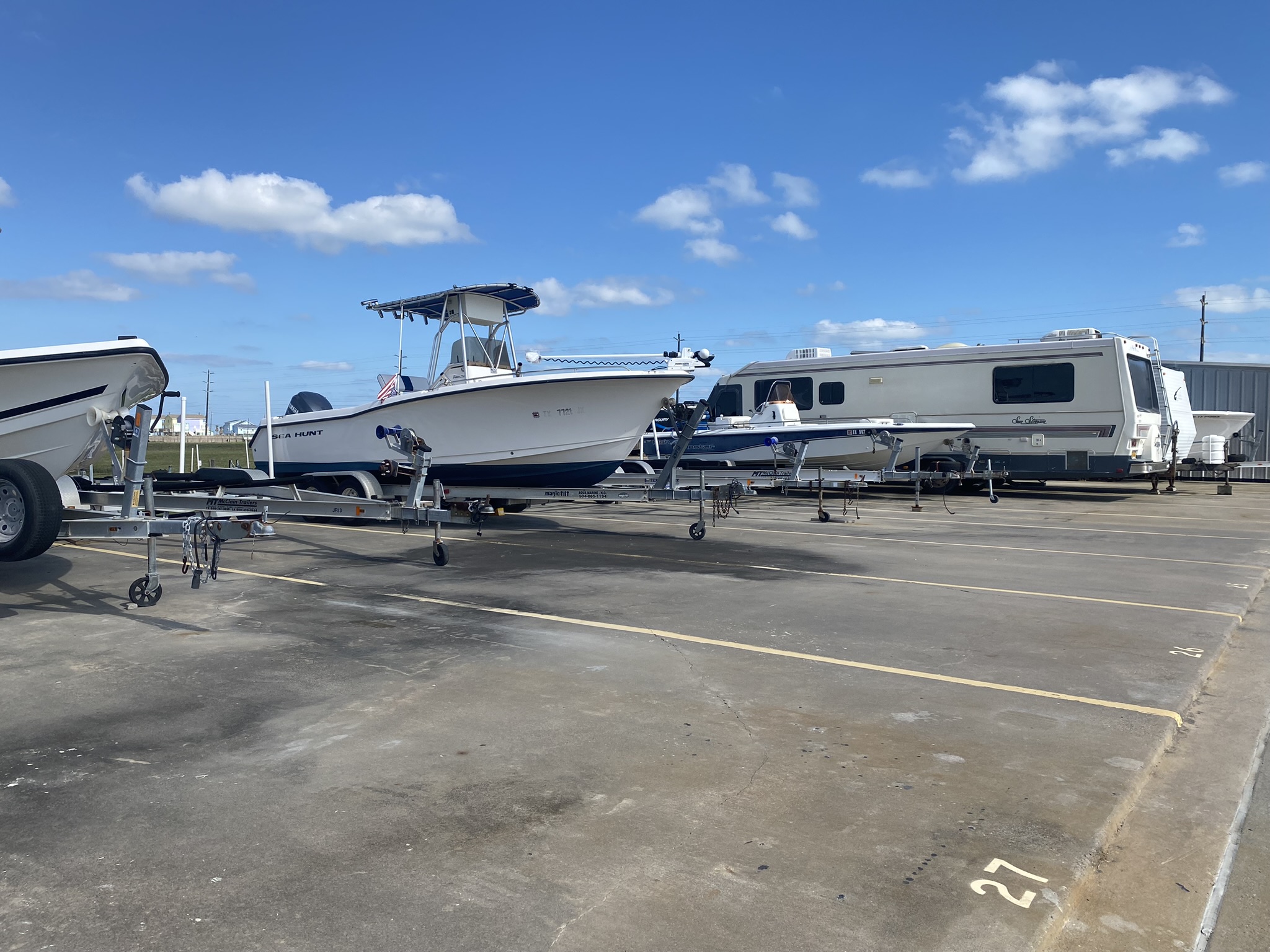
The amount of pre-storage maintenance work required is directly related to the storage environment the vehicle will sit in. An ATV or trailer stored in an enclosed unit experiences significantly lower UV exposure, smaller temperature swings, reduced humidity cycling, and essentially zero hail risk compared to one stored on an open lot.
That reduced environmental stress means the degradation processes that pre-storage maintenance is designed to slow — fuel breakdown, battery drain, corrosion, rubber seal drying — all progress more slowly in a covered or enclosed unit than in open storage. Owners who store in enclosed units at facilities like Lone Star Boat and RV Storage on TX-46 near Boerne are essentially extending the protection window of every maintenance step they take before parking.
Covered storage provides a meaningful upgrade over open lot exposure — particularly for UV-sensitive plastics, seat material, and painted surfaces. Enclosed storage goes further, moderating temperature extremes and eliminating lateral weather exposure on all surfaces. For higher-value ATVs or trailers stored for extended periods, the additional protection of enclosed storage reduces the maintenance burden at the start of the next season.
Getting Your Equipment Into Storage the Right Way
Lone Star Boat and RV Storage on TX-46 serves ATV and trailer owners across Boerne, Bulverde, Spring Branch, Fair Oaks Ranch, and Helotes with covered and enclosed unit options, drive-up access, paved driveways, and 24/7 keyless gate entry. The combination of proper pre-storage prep and a quality storage environment is what delivers an ATV or trailer that is genuinely ready to go at the start of the next season, rather than one that requires troubleshooting before it can be used.
New tenants receive 50% off their second and third months. Reserve your covered or enclosed unit on the Boerne ATV and trailer storage reservations page. To compare all three Hill Country locations, visit the Lone Star RV and boat storage page. Questions about unit sizing or covered options? Reach the team through the contact page — a local person will get back to you.
Categories